Weather Change and Migraine Sensitivity: Pressure, Heat, Wind and Light
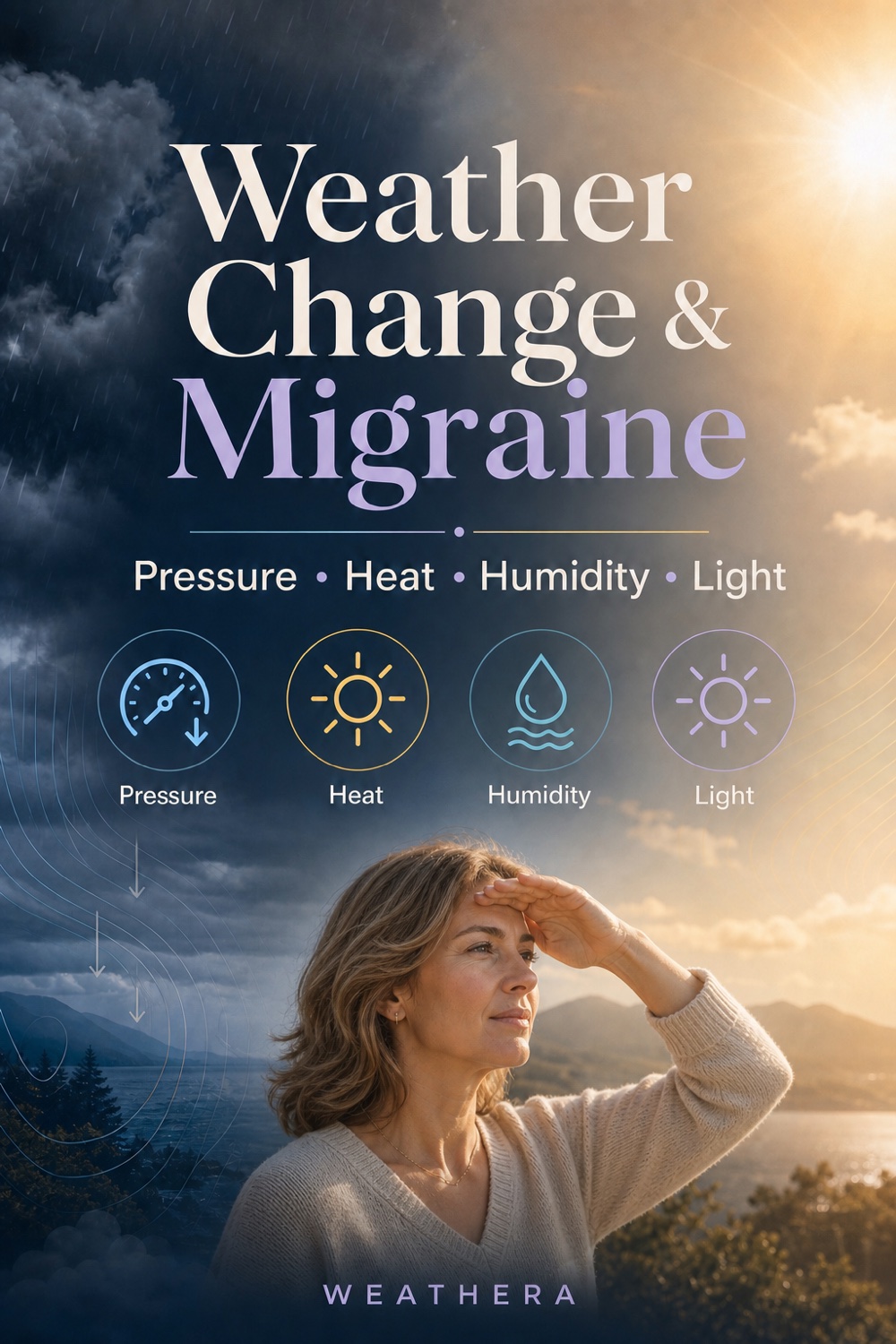
Weather change may be one migraine trigger for some people, especially when pressure shifts, heat, humidity, wind, glare or poor sleep stack with personal triggers.
No forecast can tell you that a migraine will happen. The safer use is preparation: notice weather patterns, protect sleep, reduce total trigger load and follow your clinician's migraine plan.

What this weather factor means
Weather change can include pressure movement before storms, sudden heat, cold fronts, bright sun after clouds, dry wind, humid nights or air quality changes.
Because migraine is neurological and individual, the same weather day may be difficult for one person and neutral for another.
Why some people may feel it
People often remember attacks that arrive around dramatic weather. A diary helps separate true repeated patterns from coincidence.
The most actionable pattern is usually a combination: pressure drop plus warm humid night, storm plus poor sleep, or glare plus dehydration.
How Weathera shows it
Weathera summarizes weather sensitivity factors in your city so you can compare migraine days with pressure, humidity, wind, temperature range and sleep-sensitive weather.
Use the forecast as a planning tool, not a diagnosis or a promise that symptoms will occur.
What to watch today
- Pressure changing quickly before rain or storms.
- Heat and humidity, especially after poor sleep.
- Bright glare, rapid cloud-to-sun changes or strong wind.
- Weather change that repeats before attacks in your own diary.
FAQ
Can weather changes trigger migraine?
Some people report weather as a trigger, but migraine triggers are individual and often stack. Track weather together with sleep, meals, stress, hormones and medication.
Is pressure or humidity more important for migraine?
It varies. Some people notice pressure changes, while others notice heat, humidity, glare, wind or poor sleep.
How should I use a weather migraine forecast?
Use it for preparation: protect sleep, hydrate, manage glare, keep routines stable and follow prescribed treatment plans.